
For home-educating families Years 3 to 6
Free KS2 maths for home education
Practice for home education (home schooling) in Years 3 to 6, with every topic in the order English schools teach them. No sign-up, nothing to install, and no adverts from other companies.
Practice by year and topic
Pick a year, then a topic. The questions are made fresh each time and marked straight away, with a hint when an answer is wrong. Under each topic is every skill it covers and the term schools usually teach it, but you do not have to follow the National Curriculum at home (GOV.UK), so take them in any order.
Year 3, ages 7 to 8, 9 topics
Practise a whole term (Autumn, Spring or Summer) or the whole of Year 3, or pick a topic below.
Year 3: Number Lines and Place Value
11 skills
- Recognise the place value of each digit in a three-digit number (hundreds, tens, ones)Autumn
- Identify, represent and estimate numbers using different representations; partition three-digit numbersAutumn
- Read and write numbers up to 1000 in numerals and in wordsAutumn
- Know that 10 tens are equivalent to 1 hundred, and work out how many tens are in a three-digit multiple of tenAutumn
- Count from zero in multiples of 50 and 100Autumn
- Compare and order numbers up to 1000Autumn
- Find 10 or 100 more or less than a given numberAutumn
- Read the number marked on a number lineAutumn
- Place a number on a number lineAutumn
- Estimate where a number sits on a number lineAutumn
- Read a number line where not every mark is labelledAutumn
Year 3: Addition and Subtraction
6 skills
- Add and subtract numbers mentally, including a three-digit number and ones, tens or hundredsAutumn
- Add and subtract numbers to find and use complements to 100Autumn
- Secure fluency in addition and subtraction facts that bridge tenAutumn
- Add numbers up to three digits in a written column methodAutumn
- Subtract numbers up to three digits in a written column methodAutumn
- Estimate the answer to a calculation and use the inverse to check answers and solve missing number problemsAutumn
Year 3: Times Tables and Division
5 skills
- Recall and use multiplication and division facts for the 3, 4 and 8 multiplication tablesAutumn
- Write and calculate mathematical statements for multiplication and division within the tables they knowSpring
- Apply place-value knowledge to scale known additive and multiplicative number facts by tenSpring
- Multiply two-digit numbers by a one-digit number using mental and progressing to formal written methodsSpring
- Solve problems involving multiplication and division, including scaling and correspondence problemsSpring
Year 3: Fractions
4 skills
- Understand and write proper fractions to represent one or several equal parts of a wholeSpring
- Recognise and show, using diagrams, equivalent fractions with small denominatorsSpring
- Find and write unit and non-unit fractions of a set of objects or quantitySummer
- Compare and order unit fractions and fractions with the same denominators; add and subtract fractions with the same denominator within one wholeSummer
Year 3: Measurement
5 skills
- Measure a length with a rulerSpring
- Read a capacity from a measuring jugSpring
- Read a mass from a scaleSpring
- Add and subtract lengths, masses and capacitiesSpring
- Compare lengths, masses and capacitiesSpring
Year 3: Shapes, Angles and Lines
8 skills
- Work out the perimeter of a shapeSpring
- Measure the sides of a shape to find its perimeterSpring
- Recognise and name common 2-D polygons by their number of sides (triangle, quadrilateral, pentagon, hexagon)Summer
- Tell a horizontal line from a vertical oneSummer
- Spot parallel and perpendicular linesSummer
- Recognise, name and describe 3-D shapes, including faces, edges and verticesSummer
- Say whether an angle is bigger or smaller than a right angleSummer
- Match right angles to quarter, half and three-quarter turnsSummer
Year 3: Money
2 skills
- Work out the change from an amount of moneySummer
- Add up amounts of money in pounds and penceSummer
Year 3: Telling the Time
3 skills
- Tell and write the time on an analogue clock to the minute, including using Roman numerals and 12-hour clocksSummer
- Compare durations of events and find the number of minutes between two timesSummer
- Know the number of seconds in a minute, minutes in an hour, hours in a day, days in a week, months in a year and days in a yearSummer
Year 3: Charts and Pictograms
3 skills
- Read and answer questions about a bar chartSummer
- Read and answer questions about a pictogramSummer
- Read and answer questions about a tableSummer
Year 4, ages 8 to 9, 9 topics
Practise a whole term (Autumn, Spring or Summer) or the whole of Year 4, or pick a topic below.
Year 4: Number and Place Value
8 skills
- Recognise the place value of each digit in a four-digit number (thousands, hundreds, tens, ones)Autumn
- Know that ten hundreds make a thousand, and find how many hundreds are in a multiple of 100Autumn
- Read and locate four-digit numbers on a number line, and find the nearest multiples of 100 and 1000Autumn
- Divide 1000 into equal parts and read scales marked in multiples of 1000Autumn
- Order and compare numbers beyond 1000Autumn
- Find 1000 more or less than a given numberAutumn
- Count in multiples of 6, 7, 9, 25 and 1000Autumn
- Round any number to the nearest 10, 100 or 1000Autumn
Year 4: Roman Numerals and Negative Numbers
1 skill
- Read Roman numerals to 100 (I to C)Autumn
Year 4: Addition and Subtraction
3 skills
- Add and subtract numbers with up to four digits using formal column methodsAutumn
- Estimate by rounding, and use the inverse to check answers and solve missing-number problemsAutumn
- Solve two-step addition and subtraction problems in contextAutumn
Year 4: Times Tables, Multiplication and Division
8 skills
- Multiply and divide mentally using known facts, including by 0 and 1 and multiplying three numbersAutumn
- Recall multiplication and division facts for tables up to 12 x 12Autumn
- Multiply and divide whole numbers by 10 and 100Spring
- Scale known multiplication facts by 100Spring
- Find factor pairs of a number and use multiplication facts and commutativitySpring
- Use the distributive law to multiply a two-digit number by a one-digit numberSpring
- Multiply a two- or three-digit number by a one-digit number using short multiplicationSpring
- Divide a two-digit number by a one-digit number, with a remainderSpring
Year 4: Measurement
6 skills
- Find the area of rectilinear shapes by counting squaresAutumn
- Measure and calculate the perimeter of a rectilinear figure (including squares) in centimetres and metresSpring
- Convert between different units of measure (for example, kilometre to metre; hour to minute)Summer
- Estimate, compare and calculate different measures, including money in pounds and penceSummer
- Read, write and convert time between analogue and digital 12- and 24-hour clocksSummer
- Solve problems involving converting between units of timeSummer
Year 4: Fractions
4 skills
- Recognise and find families of common equivalent fractionsSpring
- Reason about and locate mixed numbers in the linear number systemSpring
- Convert between mixed numbers and improper fractionsSpring
- Add and subtract fractions with the same denominator, including improper and mixed numbersSpring
Year 4: Decimals
8 skills
- Count up and down in tenths, and read tenths on a number lineSpring
- Count up and down in hundredthsSpring
- Recognise and write decimal equivalents of tenths and hundredthsSpring
- Find the effect of dividing a one- or two-digit number by 10 and 100Spring
- Compare numbers with the same number of decimal places, up to two decimal placesSummer
- Solve money and measure problems involving decimals to two decimal placesSummer
- Recognise the decimal equivalents of one half, one quarter and three quartersSummer
- Round decimals with one decimal place to the nearest whole numberSummer
Year 4: Shapes, Angles and Coordinates
8 skills
- Compare and classify triangles based on their properties (equilateral, isosceles, scalene, right-angled)Summer
- Compare and classify quadrilaterals (square, rectangle, rhombus, parallelogram, trapezium)Summer
- Identify acute, obtuse and right angles, and compare and order angles up to two right angles by sizeSummer
- Identify lines of symmetry in 2-D shapes presented in different orientationsSummer
- Describe positions on a 2-D grid as coordinates in the first quadrantSummer
- Plot specified points and draw or complete a polygon from coordinatesSummer
- Describe movements between positions as translations of a given unit to the left/right and up/downSummer
- Complete a simple symmetric figure with respect to a specific line of symmetrySummer
Year 4: Charts and Line Graphs
2 skills
- Interpret and present discrete and continuous data using appropriate graphical methods, including time graphs (line graphs)Summer
- Solve comparison, sum and difference problems using information presented in bar charts, pictograms, tables and other graphsSummer
Year 5, ages 9 to 10, 8 topics
Practise a whole term (Autumn, Spring or Summer) or the whole of Year 5, or pick a topic below.
Year 5: Place Value
8 skills
- Recognise the place value of each digit in numbers up to 1,000,000Autumn
- Read and write numbers to at least 1,000,000 in numerals and in wordsAutumn
- Compare and order numbers to at least 1,000,000Autumn
- Round any number up to 1,000,000 to the nearest 10, 100, 1000, 10,000 and 100,000Autumn
- Count forwards and backwards in steps of powers of 10 up to 100,000Autumn
- Read Roman numerals to 1000 (M) and recognise years written in Roman numeralsAutumn
- Read and place numbers up to 1,000,000 on a number line and find the nearest round numberAutumn
- Interpret negative numbers in context and count forwards and backwards through zeroSummer
Year 5: Addition and Subtraction
4 skills
- Add and subtract whole numbers with more than 4 digits using formal column methodsAutumn
- Add and subtract numbers mentally with increasingly large numbersAutumn
- Use rounding to check answers and judge whether a result is reasonableAutumn
- Solve multi-step addition and subtraction problems, deciding which operations and methods to useAutumn
Year 5: Multiplication and Division
11 skills
- Identify multiples and common multiplesAutumn
- Identify factors, including all factor pairs of a number, and common factors of two numbersAutumn
- Express a number as a product of two or three factorsAutumn
- Know the vocabulary of prime, composite and prime factors, and recall prime numbers to 19Autumn
- Recognise and use square numbers and cube numbers, and the notation for squared and cubedAutumn
- Multiply and divide whole numbers and decimals by 10, 100 and 1000Autumn
- Multiply and divide numbers mentally drawing upon known factsSpring
- Solve problems involving multiplication and division, including scaling by simple fractions and rate problemsSpring
- Multiply numbers up to 4 digits by a one-digit number using short multiplicationSpring
- Multiply numbers up to 4 digits by a two-digit number using long multiplicationSpring
- Divide numbers up to 4 digits by a one-digit number using short division and interpret remainders in contextSpring
Year 5: Fractions
8 skills
- Compare and order fractions whose denominators are multiples of the same numberAutumn
- Identify, name and write equivalent fractions, including tenths and hundredthsAutumn
- Convert between mixed numbers and improper fractions with larger wholes and denominatorsAutumn
- Add and subtract fractions with denominators that are multiples of the same numberAutumn
- Multiply proper fractions and mixed numbers by whole numbersSpring
- Understand fractions as division and find fractions of a quantitySpring
- Read and write decimal numbers as fractions, and fractions as decimalsSpring
- Find the whole when a fraction of it is knownSpring
Year 5: Decimals and Percentages
11 skills
- Understand the times-ten and divide-by-ten relationship between adjacent place-value columns, including decimalsSpring
- Recall and use equivalent fractions, decimals and percentages for common valuesSpring
- Recognise and use thousandths, relating them to tenths, hundredths and decimal equivalentsSpring
- Round decimals with two places to the nearest whole number and to one decimal placeSpring
- Read, write, order and identify decimals with up to three decimal placesSpring
- Compare and order decimals with up to three decimal placesSpring
- Locate a decimal on a number line and find the nearest whole and nearest tenthSpring
- Read scales and number lines where the unit interval is divided into equal partsSpring
- Scale known additive and multiplicative facts by one tenth and one hundredthSpring
- Recognise the per-cent symbol and write a percentage as a fraction and a decimalSpring
- Add and subtract decimals, including complements to 1 and mixed numbers of decimal placesSummer
Year 5: Measurement
9 skills
- Measure and calculate the perimeter of composite rectilinear shapesSpring
- Calculate and compare the area of rectangles using the area formulaSpring
- Estimate the area of irregular shapes by counting squaresSpring
- Convert between metric units, including those giving decimal answersSummer
- Use approximate equivalences between metric and common imperial unitsSummer
- Estimate volume by counting cubic centimetre blocksSummer
- Estimate, read and compare capacity and volumeSummer
- Solve money and measure problems using all four operations with decimalsSummer
- Solve problems converting between units of timeSummer
Year 5: Charts, Tables and Graphs
4 skills
- Read, interpret and solve problems using line graphsSpring
- Compare two data sets on a single line graphSpring
- Read and interpret timetables, including journey durationsSpring
- Complete, read and interpret a two-way tableSpring
Year 5: Shapes, Angles and Coordinates
11 skills
- Compare and order angles by their sizeSummer
- Reflect a shape in a horizontal or vertical mirror lineSummer
- Translate a shape and give the new coordinates of its verticesSummer
- Name acute, right, obtuse, straight and reflex anglesSummer
- Estimate the size of an angle in degrees using reference anglesSummer
- Measure angles in degrees using a protractorSummer
- Identify an angle of a given sizeSummer
- Find missing angles on a straight line and at a pointSummer
- Distinguish regular and irregular polygons by their sides and anglesSummer
- Use the properties of rectangles to find missing sides and anglesSummer
- Identify 3-D shapes from 2-D representations and netsSummer
Year 6, ages 10 to 11, 10 topics
Practise a whole term (Autumn, Spring or Summer) or the whole of Year 6, or pick a topic below.
Year 6: Place Value
7 skills
- Determine the value of each digit in numbers up to 10,000,000Autumn
- Read and write numbers up to 10,000,000 in figures and wordsAutumn
- Compare and order numbers up to 10,000,000Autumn
- Round any whole number up to 10,000,000 to a required degree of accuracyAutumn
- Read and place numbers up to 10,000,000 on a number line and find the nearest round numberAutumn
- Use negative numbers in context and calculate intervals across zeroAutumn
- Understand the times-ten relationship between adjacent place-value columns, including decimalsAutumn
Year 6: Addition and Subtraction
6 skills
- Add and subtract whole numbers with more than four digits using column methodsAutumn
- Perform mental calculations with increasingly large numbersAutumn
- Use the order of operations to carry out calculations including bracketsAutumn
- Place brackets in an expression to give a required valueAutumn
- Use estimation to check answers and determine an appropriate degree of accuracyAutumn
- Solve multi-step problems deciding which operations and methods to useAutumn
Year 6: Multiplication and Division
10 skills
- Multiply numbers up to four digits by a two-digit number using long multiplicationAutumn
- Use the rules of divisibility (2, 3, 4, 5, 6, 8, 9, 10, 25)Autumn
- Divide numbers up to four digits by a two-digit number using long divisionAutumn
- Interpret remainders as whole numbers, fractions or by rounding, as appropriateAutumn
- Divide numbers up to four digits by a one-digit number, interpreting remainders by contextAutumn
- Perform mental calculations with mixed operations and large numbersAutumn
- Identify common factors and the highest common factor of two numbersAutumn
- Identify common multiples and the lowest common multiple of two numbersAutumn
- Identify prime numbers and express a number as a product of its prime factorsAutumn
- Solve multi-step problems involving multiplication and divisionAutumn
Year 6: Fractions
8 skills
- Simplify fractions using common factorsAutumn
- Compare and order fractions, including fractions greater than oneAutumn
- Add and subtract fractions with different denominatorsAutumn
- Add and subtract mixed numbers with different denominatorsAutumn
- Multiply pairs of proper fractions, writing the answer in its simplest formAutumn
- Divide a proper fraction by a whole numberAutumn
- Find a fraction of a quantity and recover the whole from a partAutumn
- Solve multi-step problems involving fractionsAutumn
Year 6: Measurement
10 skills
- Convert between metric units, using decimals up to three placesAutumn
- Solve money and measure problems using all four operationsAutumn
- Convert between miles and kilometresAutumn
- Solve problems involving the calculation and conversion of units of measureAutumn
- Recognise that shapes with the same area can have different perimeters and vice versaSpring
- Find the perimeter and area of composite rectilinear shapesSpring
- Calculate the area of trianglesSpring
- Calculate the area of parallelogramsSpring
- Calculate the volume of cubes and cuboids using the formulaSpring
- Compare the volumes of cubes and cuboidsSpring
Year 6: Decimals and Percentages
10 skills
- Identify the value of each digit in numbers with up to three decimal placesSpring
- Solve problems involving percentages and percentage changeSpring
- Multiply and divide numbers by 10, 100 and 1000 giving answers up to three decimal placesSpring
- Multiply one-digit numbers with up to two decimal places by whole numbersSpring
- Use written division methods where the answer has up to two decimal placesSpring
- Associate a fraction with division to find its decimal equivalentSpring
- Round decimals with up to three decimal places to a required accuracySpring
- Solve problems requiring answers rounded to a specified degree of accuracySpring
- Recall and use equivalences between fractions, decimals and percentagesSpring
- Find a percentage of a whole numberSpring
Year 6: Ratio and Proportion
9 skills
- Express and simplify ratios using common factorsSpring
- Use fractions to describe the relative sizes of two quantitiesSpring
- Solve ratio problems using the unitary methodSpring
- Solve problems involving unequal sharing in a ratioSpring
- Solve problems involving direct proportion and scalingSpring
- Solve problems involving relative sizes and scale factorsSpring
- Calculate percentages of amounts for comparisonSpring
- Find a missing side of similar shapes using a scale factorSpring
- Find the scale factor between two similar shapesSpring
Year 6: Algebra
7 skills
- Use simple formulae by substituting valuesSpring
- Express a relationship as an algebraic ruleSpring
- Generate and continue a linear number sequenceSpring
- Describe a linear sequence and find a given termSpring
- Express missing-number problems algebraically and solve themSpring
- Find pairs of numbers that satisfy an equation with two unknownsSpring
- Enumerate all possibilities of combinationsSpring
Year 6: Statistics
8 skills
- Interpret and read pie chartsSpring
- Use a pie chart and a total to find the quantity a slice representsSpring
- Construct a pie chart from a set of dataSpring
- Interpret line graphs to solve problemsSpring
- Compare two data sets on one line graphSpring
- Calculate and interpret the mean as an averageSpring
- Use the mean to find a missing value or a totalSpring
- Interpret and reason about the mean in contextSpring
Year 6: Shapes, Angles and Coordinates
12 skills
- Draw 2-D shapes given dimensions and anglesSummer
- Plot points and find a missing vertex in all four quadrantsSummer
- Reflect a shape in the x-axis or y-axis using coordinatesSummer
- Translate a shape on the full coordinate grid using coordinatesSummer
- Recognise, describe and build simple 3-D shapes, including making netsSummer
- Describe 3-D shapes by their faces, edges and verticesSummer
- Compare and classify shapes by their properties and sizesSummer
- Illustrate and name the parts of a circle, including radius, diameter and circumferenceSummer
- Find unknown angles in triangles and quadrilateralsSummer
- Find the interior angle of a regular polygonSummer
- Find unknown angles using vertically opposite angles and angles at a point or on a lineSummer
- Describe positions on the full coordinate grid (all four quadrants)Summer
For schools there is a copy grouped by the National Curriculum's own headings, with the DfE ready-to-progress codes, which can be saved as a PDF: the curriculum map.
Times tables, with no time limit
Your child picks which of the 2 to 12 times tables to work on, and 10 or 25 questions. A clock shows 6 seconds, but it never cuts them off. Every answer is marked as they go, and Go again brings back the ones they missed.
The tables check and SATs
Home-educated children do not take the Year 4 multiplication tables check or the Year 6 SATs. Both are only for children on a school's register, as the government's 2027 rules for Key Stage 2 say.
GOV.UK says home educators can download the 2027 SATs papers from Friday 21 May 2027, after the tests. The tables check is not available to download.
If you want to try either at home, our practice for both is free, independent and built to the published rules.
BrightWren is independent. It is not connected to the Standards and Testing Agency or the Department for Education.
A one-page leaflet to pass on
For families who are new to home education: what is free here and where to find it, on one A4 page with links you can tap. Print it or send it on.
Download the leaflet (PDF, 226 KB)Run a home education service or group? You are welcome to link to this page or share the leaflet with families.
For grown-ups: our app

BrightWren Plus
Our app for families, Years 3 to 6. It picks their practice, marks it, and shows them how. It runs in the browser on a phone, tablet or laptop, with nothing to install.
- Five a day, picked for them. Daily 5 picks five questions a day from each child's year, and they get harder as your child gets better.
- Marked, with the why. A wrong answer shows the right one straight away, with a hint for that slip or the method step by step.
- A progress page for you. Every topic in their year as On track, Getting there or Needs a hand, from their last 20 answers.
- Any topic, whenever you get to it. Quizzes let them pick any topic, a whole term or the whole year, ten questions at a time.
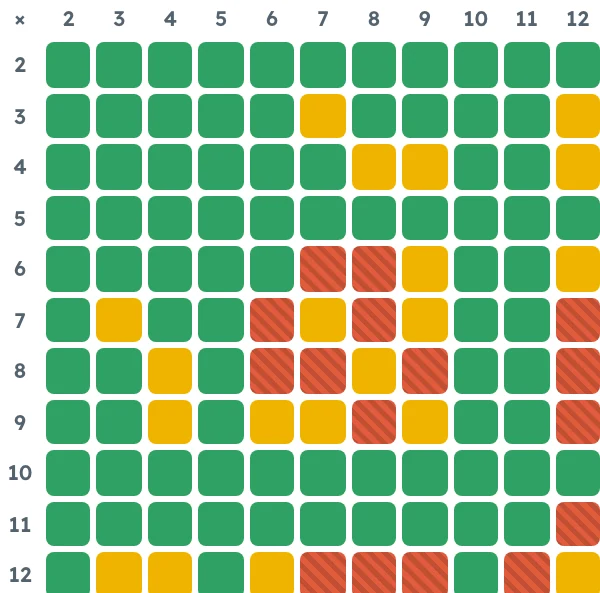
- A fact map of the times tables. In Years 3 and 4, every times tables fact: known, not right yet or not tried yet.
- A space game alongside. Each planet is a topic. Hats for their alien and paint for their UFO are earned with asteroids they catch, never bought with money.
- Every child, one account. Each child is a nickname and a school year. The app never asks for their real name, birthday, school, address or photo.
- Free, and staying free. Free all 2026/27. Families who join in the beta stay free for as long as we run it, for every child they add. It is in our terms.